


Getaway with your Sweetie

Ahh – romance! Your eyes adjust to the soft, morning light filtering in through billowing curtains, as you pick up the faint aroma of bacon and coffee wafting in from beyond your suite door. You turn on your side in the sumptuous covers and just take in your beautiful spouse, still dreaming, no doubt, of your paddling excursion, shopping for antiques and unique treasures, touring historic sites, a stroll along the bayou banks at sunset, sumptuous dinner, and dancing the night away like teenagers.
What could be more romantic than a weekend getaway amid the beauty of Louisiana’s Coast! There are well-appointed suites, romantic bed & breakfasts, cozy cabins and even tent sites to snuggle your sweetie on this most romantic holiday. Find out more about things to do and Book Your Getaway Now.

And, we’ve got built-in what-to-do lists for every interest:
If your honey is a history buff, our Civil War trail will guide you with historical markers and interesting tidbits to warm his heart.
If your sweet dove is into Birding and Wildlife Watching, we’ve got you covered.
And if your treasure swoons at the site of Victorian and Antebellum architecture, this historic tour just might just be the start of an historic adventure.
Check out other interesting itineraries, such as movie tours or paddling trails, or chart your own course with a wealth of activities.
And, of course, there is no shortage of great dining options along the Cajun Coast, with the freshest of Gulf seafood and recipes handed down for generations as well as new takes on old favorites. Choose from gumbos and steaks to étouffée’s or po-boys, and a feast of international fare made even better by virtue of being in an area that lives to eat.
And, even though we boast of small-town charm, we don’t roll up the sidewalk after supper. Our nightlife scene, casino action and live music venues will allow you and your darling to dance the night away. Check out our live music calendar for showtimes and dates!
Make the most of your weekend – come to the Cajun Coast!
Flying South for the winter?

Snow birds eager to escape clouds, miserable weather and frigid temperatures often think of Florida for the winter months unless they have family and friends to visit in Louisiana.
But, Louisiana is a great option for all snow birds, and the Cajun Coast is a perfect sampler of the state. From bayous to towns that allow you to slow down, we are rich in cuisine, history, culture and music.
Get ready to visit us with these tips:
-Pack for a variety of temperatures. Winters this far south are mild, especially when compared to any northern state. We’re never quite sure whether we’re going to be wearing coats or shorts at Christmas. Temperature swings of 30 degrees in one day are common. Light layers are your friend.
-Looking to ditch the heavy coat and boots? On the Cajun Coast, it only snows about once a decade, so leave any gear for snow at home.
-It does, however, rain. Carry an umbrella when you’re out and about in case unexpected showers pop up, as they are prone to do.
-Just like in the summer, wear comfortable shoes. Save fashionable shoes for going out to one of our fabulous restaurants and the flip flops for the park. Wear comfortable, closed-toe shoes whether you’re spending the day touring, shopping or hiking. Your feet will thank you.
A Year-Round Angler’s Paradise
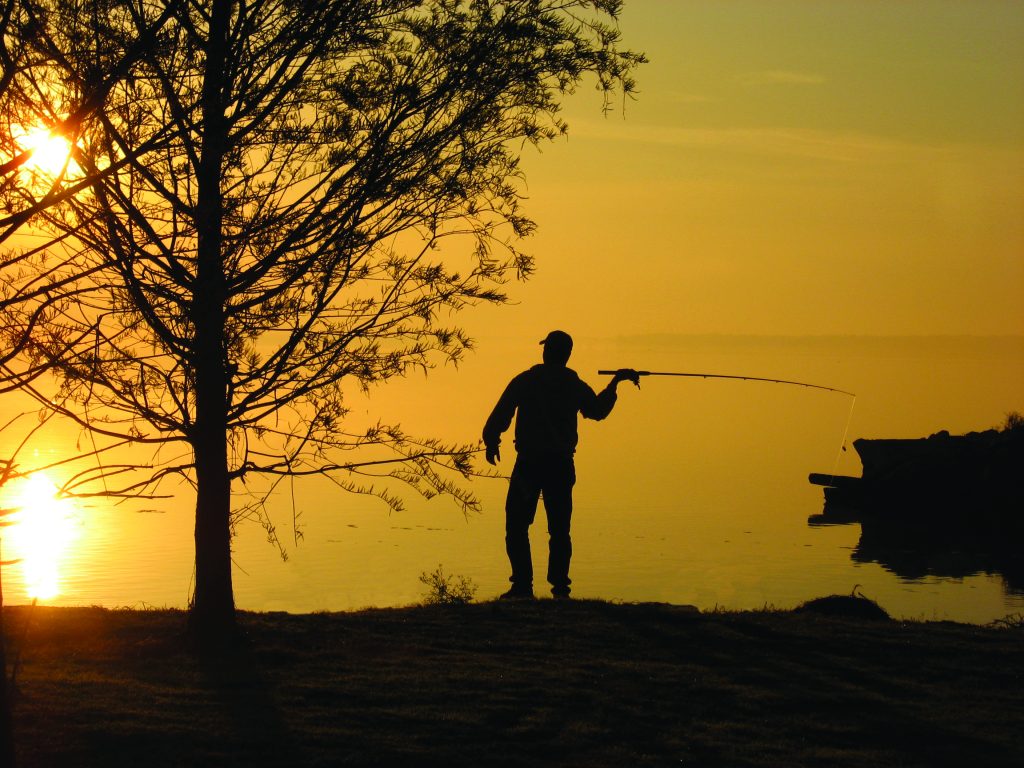
Doug Larson said “If people concentrated on the really important things in life, there’d be a shortage of fishing poles.”
On the Cajun Coast, we agree. Everyone can have a fishing pole in their hands year ‘round here. It’s just a matter of choosing where you want to cast your line.
All manner of fish, from bass and red fish to catfish, trout and much, much more can be caught any time of year, but some months are distinctly better than others.
For general guidelines, dependent on weather conditions, here is our guide for waters in St. Mary Parish, furnished by John Flores, author of the Go with the Flo outdoors column:
—January – Crappie (aka: sac-a-lait, white perch) beginning to bite.
—Febraury – Crappie peak biting period this month.
—March/April – Best months for bass, also excellent months for catfishing (species blue catfish and channel catfish).
—April-June – Bream fishing (red ear sunfish known as “chinquapins” around here, blue gills, warmouth known as “goggle eyes” around here).
—July/August – Red fish along the coastal waters. Offshore platforms boast speckled trout and red snapper in deep, deep water.
—September – Redfish, speckled trout. Bass are schooling up in the marsh where great catches take place locally.
—October – Speckled trout.
—November – blue cats (jug lining popular) in the marsh.
—December – red fish bite at times, catfish biting at times, sac-a-lait biting at times.
“Remember, it all depends on weather,” Flores said.
“We had hardly any winter last year and many fish spawn by water temperature. Such was the case with crappie and bass last year, but in many places the river was over flood stage from early January until nearly late June this year, so the conditions locally were all over the board,” he added.
To learn more about Louisiana recreational fishing regulations and obtaining fishing licenses, visit the Department of Wildlife and Fisheries.
AMA’TPAN NA’MU
By Roger Emile Stouff
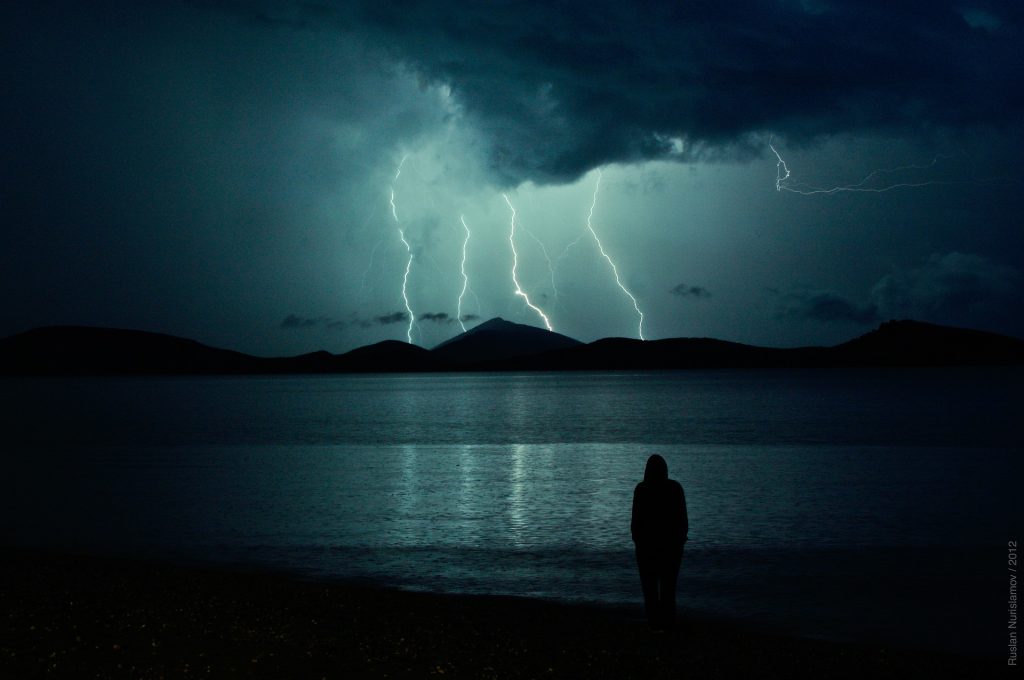
Awakening to thunder from a late afternoon nap, flashes of brilliant lightning lanced through the windows, burning my eyes with white magic.
There were massive black storm clouds outside the window when I peeked through the curtains. Though there was no place I needed to go, I put on my shoes, grabbed my keys and went to the truck, feeling the need to chase the storm.
Author Sherman Alexie once noted that some children aren’t really children at all, they are pillars of fire which burn everything they touch; and there are some children who are pillars of ash, and fall apart if you touch them. I am a child of the storm. Born in the eye of a 1964 hurricane, I am a child of wind, and of water.
Across the miles along the road of my life, I have always chased storms. I feel an affinity with them, some kinship which trembles and sparks in air charged by the lightning. So not really knowing where I would go, I chased the storm broiling to the north, and the road led me to the Atchafalaya Basin Protection Levee, which I crossed and found myself on the southern shore of Grande Lake.
Ama’tpan na’mu. Beneath my feet, the broken white clamshell was like bleached bone. It stretched out for half a mile to the east and west, a fingernail of raised mound deposited here a basketful at a time by my ancestors. This was Ama’tpan na’mu, a very large village which looked out over part of Sheti, that great series of interconnected lakes from which we took our name in kinship.
I parked the truck away from the attendant’s shack, for today this is a boat landing, bulldozed at some point in the early part of the century so that fisherman could launch into Grande Lake here. I can still walk along the edge and find bits of broken pottery, some plain, some ornate. When I was a child, I would stand here with my father and we couldn’t see the other side of Grande Lake, but decades of man’s tampering with nature have taken their toll, and the northern bank is now easily visible. Grande Lake is but a shadow of its former self. Much like the people who share its ancestral name.
Over that now-near treeline of cypress and willows, a blackness as absolute as midnight churned and spit silver fire at the earth. The bolts found some ground below, discharged into the swampy watersways beyond. It was here, on Ama’tpan na’mu, that an entire village stared in amazement as a Spanish ship sailed up Grande Lake, having entered the Atchafalaya River from the Gulf of Mexico and made their way north. These were no mere Spanish colonists, no priests and missionaries: These were Conquistadors, set upon their mission by God, they supposed.
We call it The Beach now. It rather looks, from a distance, like a white sandy beach, until closer examination reveals the crushed and compacted clamshell. The clam species rangia was abundant when these lakes were sometimes brackish, and Chitimacha would feast on them, using the discarded shells as a sort of building material, a pre-historic concrete as it were. It kept their feet out of the mud in Louisiana’s frequent rains, provided a stable base for erecting palmetto huts, and the stark whiteness of it was a pristine backdrop to easily see a big, black water moccasin snake slithering up on the children.
Overhead, silver warriors throw spears from inside the black clouds, spears which turn into jagged, spectacular lightning bolts. The crash of them is created by a thunderbird, lurking somewhere in those same billows, beating its wings like a gargantuan raptor. There is no rain. I watch the lightning, not a second goes by without a magnificent blast of power, pitched down by silver-faced dead.
When the galleons arrived on Grande Lake and approached Ama’tpan na’mu, the na’ta of the village refused them. He forbade them to come ashore. If I look beyond the scattered wreckage of old oil drums lashed together as buoys, derelict boat trailers and assorted metal and wooden junk, I can nearly see small children, their faces stricken with amazement, looking out at these huge wooden vessels with their great sails, the strange, iron-clad men upon them, their faces so pale and bearded. I can see the na’ta, standing firm in his protection of a single village among dozens in the nation. What might have gone through his mind? Surely he could not have imagined that he was the first to witness the end, those who would, with the passing of time, reduce his thriving nation from tens of thousands to a handful of survivors numbering less than one hundred.
If I follow the village shell bank by boat, as I did last spring, to the east away from the ramp, there are shallows in which huge redears gather for a short few days each year. I chased them with the rod, they were fat and bold. They had come from the few remaining depths of Grande Lake to make their spawning nests in the hard shell shallows of Ama’tpan na’mu, where nearly five hundred years ago, the village na’ta refused the Spanish, and steel was brandished, cold and glistening white, like the lightning bolts crashing and crackling with power out across the lake.
It saddens me, sometimes, that we do not know his name, that na’ta, the chief of the village of Ama’tpan na’mu who stood, surely afraid and uncertain of his actions, against their blades. But the Spanish were beaten back, forced to leave, and they made their way down the lake and river, accosted by Chitimacha warriors all along the way as the alarm was sounded from village to village. Eventually they reached the safety of the Gulf of Mexico, and that first tragic encounter ended.
Traveling northwest by boat, I can enter the terribly shallow waters of Cok’tangi, “pond lily worship place,” which the Spanish called Grande Avoille Cove. The levee intersects it now, and its other half to the south is a favorite spot for fishing bream and bass in the spring, though in the summer its shallow waters are too hot to support much of a fish population. If I travel southeast, around Taylor’s Point and into the river proper, I can traverse the entire Atchafalaya basin with its winding oilfield canals, natural bayous, hidden ponds and pools.
But lighting is flashing everywhere, and thunder is resonating, trembling the clamshell mound. The storm is moving just north of me, to the southwest, and skirting the edge of the lake. I can see gray rain coming. Soon it will fall and Ama’tpan na’mu will glisten under it. A chief, when the word na’ta was no longer used, is buried somewhere on this mound, forbidden interment in Christian cemeteries during the mid-1800s, for after the Spanish retreated that fateful day, they made alliances with another tribe far to the east, and returned in force. The first chapter in the demise of the people of the lake was written in the war that followed.
Ama’tpan na’mu was long dead, its people scattered and decimated, when the Union army landed here to assault rebel troops stationed in Franklin in what would become known as the Battle of Irish Bend, just a skirmish by most reckonings, but a part of local history and folklore. Irish Bend is Oku’nkiskin, “old man’s shoulder,” a steep twist of Bayou Teche to the southeast.
The storm is passing, carrying its spears of lightning and silver warriors with it. Clearing skies behind, peeking sunshine and scattered rain. I am reminded that I have not fished this side of the levee since last year. Perhaps I’ll bring the boat some weekend soon, put it over into Grande Lake from the shell beach of Ama’tpan na’mu. I have probably missed the big redears, what we here call chinquapin, but there are still bream and bass moving along the canals and through the cypress.
I start the truck and head for home, leaving the old village behind, white and still. I make my way home, to T’kasi’tunshki, which the French named Charenton. As I am climbing the road which crosses the levee, in the rearview mirror I can almost see, in the gray misting of rain augmented by a few shining sunbeams far behind, massive, parchment-colored sails, mahogany bows, glistening swords, and one steadfast man standing at the water’s edge on Ama’tpan na’mu. His name is forgotten, but his courage will live on in the hearts of some long after the storms have passed.
Roger Emile Stouff is the Managing Editor of the St. Mary & Franklin Banner-Tribune. He was narrator and co-writer of the Louisiana Public Broadcasting documentary “Native Waters: A Chitimacha Recollection” based on his memoirs. He is also the author of the acclaimed “Lawson’s Peak” series of novels, including a mystery series.
From Discus to Quiots to Horseshoes: How Horseshoes Had its Start in a (Seemingly) Unrelated Olympic Sport

Ancient Grecians surely watched with anticipation as their favorite contestants competed in early Olympic events like boxing, archery, chariot races and discus throwing.
The discus was similar in form to a modern quiot – metal, rope or rubber rings – but not in size or weight. Originally, it was a metal or stone circular disk, 10 or 12 inches in diameter, with a thong passed through the center hole. The athlete swung the disk by the strap and released for greatest possible distance.
Quiots is a traditional game involving the throwing of rings over a set distance, usually to land on or near a spike.
It is believed that poor Greeks who could not afford the discus set up a stake and threw discarded horseshoes at it.
“Horseshoe historians have not been able to discover when the game of quoits or horseshoes was changed so that it was pitched at two stakes, but it is pretty well established that horseshoe pitching had its origin in the game of quoits and that quoits is a modification of the old Grecian game of discus throwing,” according to the National Horseshoe Pitchers Association.
Changes were notable over the last 150 or so years:
-1869: The distance between the stakes was 19 yards. The player stood level with the stake and delivered his quoit with his first step. There was no weight requirement but the outside diameter could not be more than eight inches. The ground around the stake was clay and all measurements for points were taken between the nearest parts of both quoit and stake.
These became the rules favored in the United States, but no records were kept until 1909. The game seemed to be favored among soldiers in most wars. They brought it home with them and pitching courts were laid out in hundreds of communities across the country.
-1910: The first horseshoe pitching tournament in which competition was open to the World was held in the summer of 1910 in Bronson, Kansas.
-1914: The first ruling body of horseshoe pitching of which any record was found was organized in a court room of the First District Court, Kansas City, Kansas. Stakes at this time were 38-feet apart.
-1919: The National League of Horseshoe and Quoit Pitchers was organized at the National Tournament in St. Petersburg, Florida, with representatives from 29 different states attending. They were given a charter under the laws of the State of Ohio, June 17,1921. In the 1919 Tournament, the distance from each stake was changed to 40 feet, distance that is in effect today.
-1930s-1940s: Stake height raised to 12 inches.
-1950: Stake height changed to between 14 and 15 inches.
-1982: The last major rule governing play was enacted. An official game is 40 points.
It is estimated that upwards of fifteen million enthusiasts enjoy pitching horseshoes in the United States and Canada in tournaments, leagues, recreation areas, and backyards.
*Information derived from National Horseshoe Pitchers Association
_____
To see the game in action, visit the Cajun Coast Classic October 15-16 at Kemper Williams Park in Patterson, LA.
More than 70 pitchers hailing from 16 states are scheduled to take part in the tournament, slated as the final event for the 2016 season of The Horseshoe Tour.
The tournament begins at 8:30 a.m. Saturday and Sunday and is open for public viewing. Concessions will be available. Entrance to Kemper Williams Park is $2 per vehicle.
10 Things to Know About the Southwest Reef Lighthouse

Located on the western bank of the Atchafalaya River in Berwick, Louisiana, the Southwest Reef Lighthouse is the centerpiece of the Everett S. Berry Memorial Lighthouse Park. In 1987, the lighthouse was lifted from the screw piling – where it sat since before the Civil War – in an attempt to preserve the historic structure for future generations.
Visitors to the park may view the historic structure up close while enjoying scenic views of the Atchafalaya River, relax or try their luck fishing from the recently restored wharfs, or stroll the heights of the protective seawall.
1· The historic structure is 1 of only 3 easily accessible lighthouses in the State of Louisiana.
2· Predating the American Civil War, the square, pyramidal tower constructed of iron plates was first lit September 1, 1859.
3· The lighthouse was unique in shape for the Gulf, a square pyramid sheathed in iron with a 28-foot base and standing 37 feet in height.
4· The Southwest Reef Lighthouse guided mariners on the Atchafalaya Bay until it was decommissioned in 1916.
5· It remained abandoned until 1987 when it found a new home in Berwick Bay.
6· It now stands sandwiched between the Atchafalaya River waterfront and the Great Sea Wall that protects the Town of Berwick from the mighty river’s floodwaters.
7· In 1988, the lighthouse itself was place on the National Registrar of Historic Places. It was placed in its current location—the Everett S. Berry Memorial Lighthouse Park— in 1990 and opened to public viewing in 1996.
8· A Fresnel lens and fog bell similar to what would have been used in the lighthouse are displayed in the lobby of Berwick Town Hall, located 2 blocks west of the park on Third Street.
9· Each fall, the Lighthouse serve as the terminus for the 135-mile Tour de Teche. Beginning the first Friday in October this annual race for canoes, kayaks, pirogues (the traditional Cajun canoe), and SUPs traverses the entire length of Bayou Teche in southwestern Louisiana.
10•The lighthouse, now a part of the town’s seal, also serves as the centerpiece for Berwick’s Lighthouse Festival held annually in conjunction with the finish of the Tour du Teche.
During regular business hours, bring your Lighthouse Passport by Town Hall for stamping and receive a commemorative pin. Admission to the Everett S. Berry Memorial Lighthouse Park is free.