


“Joie de Vivre,” Fishing the Cajun Coast
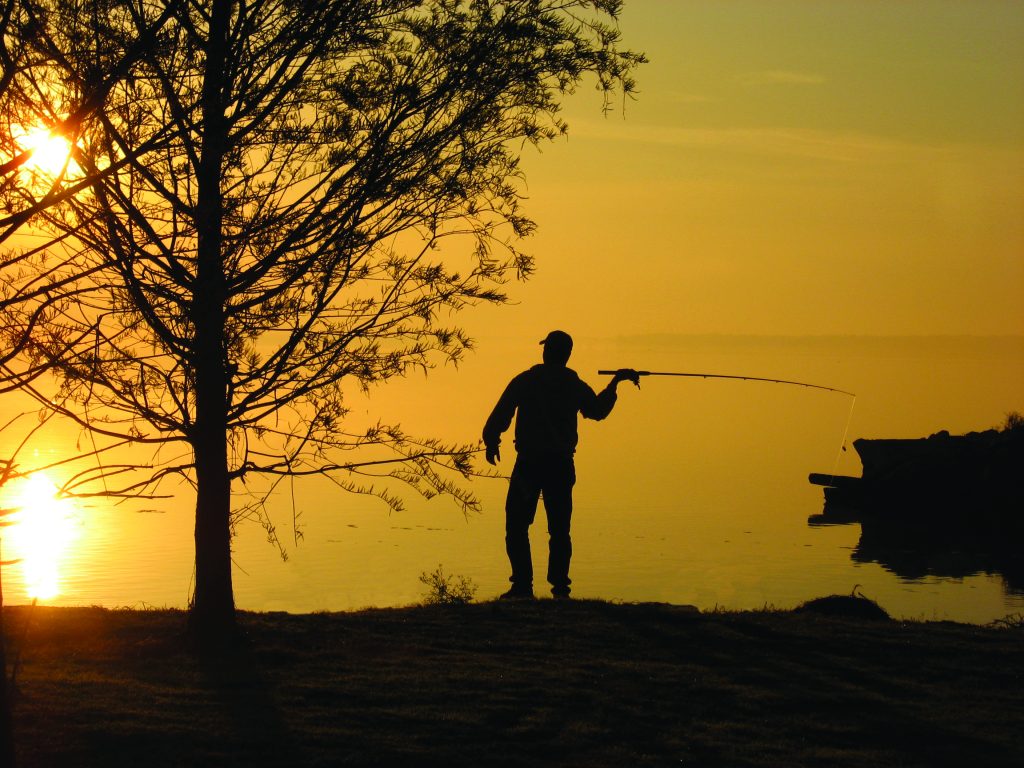
By John Flores
“Joie de Vivre,” Fishing the Cajun Coast Centrally located, uniquely created by nature, and deeply revered by the locals who live here, the waterways of St. Mary Parish’s Cajun Coast kiss the northern edge of the Gulf of Mexico. What’s more, perhaps nowhere else in America does such abundance and beauty exist together.
The name Atchafalaya comes from Choctaw words that mean “long river.” As the long river makes its southerly 137-mile trek from Simmesport where it, the Red and Mississippi Rivers diverge, the large stream winds its way through the Atchafalaya Basin eventually spilling into the Gulf of Mexico on St. Mary Parish’s door step. Here it forms the vast brackish water estuary known as the Atchafalaya Delta. And within this ecosystem along the Cajun Coast is an angler’s paradise.
Freshwater sportfish include sac-a-lait (a Cajun French name for crappie meaning, sack of milk for it’s beautiful meat), largemouth bass, a red-ear sunfish locals call “chinquapins,” bluegills and three species of catfish (blue, channel and flat head). Saltwater gamefish include red fish, black drum, speckled trout, and flounder.
The Cajun Coast is the Gateway to the Atchafalaya Basin. It’s the basin’s tupelo and cypress tree swamp that draws bass anglers from around the country. And it is here, back in 2003, that Pachuta, Mississippi FLW Bass Pro Paul Elias had a two-day, 10-fish catch totaling 34 pounds 2 ounces that earned him a $100,000 first place prize on the tour.
Along the coastal tributaries, canals and bayous largemouth “marsh” bass live fast and die young. Few reach three pounds as tropical weather events and living year-round in a dog-eat-dog world impact these little scrappers’ growth. But, during the late summer and early fall, a bass fisherman can sit on one drainage and catch fish after fish with artificial baits.
What’s not to like about catching palm-size Chinquapins and bluegills in the spring? Hot spots above Morgan City in the Atchafalaya Basin are Flat Lake, American Lake, Duck Lake and the Shell Oil Field Canals. A little No. 6 Aberdeen hook underneath a balsawood cork with a worm attached is all you need in these locations.
Catfish may be king in the parish simply because on any given day, when no other fish bites, you can always count on a catfish. Moreover, it’s a fish that can be caught tight-lining from boat or bank. Places out-of-towners can fish catfish from the bank are from the Morgan City wharf along the Atchafalaya River Front, the Berwick Boat Landing, Burns Point and Cypremort Point State Park. Just bring an ice chest, a folding chair, sunscreen and plenty to drink, as spring, summer and fall can be hot.
Saltwater anglers coming to the Cajun Coast have a plethora of places east to west below Morgan City and Franklin for some terrific action. In the summer, fall and winter — when the Atchafalaya River drops below flood stage — good catches of redfish can be made at Halter’s Island, Oyster Bayou, Locust Bayou on Point Au Fer, and the Atchafalaya Delta WMA sight fishing.
In July and August redfishing can be stellar around Marsh Island’s Worm and Bird Bayous, Southwest Pass and Dry Reef. As summer turns to fall, it’s a great time to catch speckled trout at the many Eugene Island offshore platforms, around Marsh Island in places like Pavy’s Reef, the Nickle, Tee Butte and in the Cove at Cypremort Point.
The French-speaking natives of this part of the state have a saying, “joie de vivre,” meaning; “The Joy of Living.” You’ll find out what they’re talking about when you make your next trip to fish the Cajun Coast.
Paddling on the Cajun Coast

By Donovan Garcia
CAUTION: DUE TO HIGH WATER, SOME TRAILS AND BOAT LAUNCHES MAY BE CLOSED. BOAT AND CANOE RAMPS MAY BE DAMAGED DUE TO HIGH WATER. PLEASE USE CAUTION AND CALL AHEAD REGARDING ACCESSIBLITY OF TRAILS.
From sunrise in the Atchafalaya Basin – America’s largest wetland swamp – to sunset on the Gulf of Mexico and along the bayous, canals and lakes in the intervening hours, the Cajun Coast will not disappoint as a paddling destination.
As a local with over 50 years of paddling experience, my friends and I still get excited when paddling a kayak or canoe. Alligators, birds, flowers, large cypress trees covered with moss, an eagle flying overhead and, on rare occasion, a black bear swimming across a canal are all things you may see while paddling.
This area is a special place that locals call their playground. It can be a magical place for many people willing to explore. Make the Cajun Coast a future paddling destination for you, your family and your friends. The photos and memories you take back will amaze everyone.
Deciding where to go is the biggest challenge for paddlers. With so many choices – over 250 miles of trails on paper – it’s hard to pick just one destination.
For trail maps, visit www.cajuncoastpaddle.com.
One day or Multi-day Paddling Trails Recommended
If you only have one day to paddle the Atchafalaya Basin, consider the Grand Avoille Trail. Located in Lake Fausse Point, the trail is part of the original Atchafalaya Basin which was cut off when the west protection levee was built. Instead of paddling on the open lake, take a journey through time as you paddle in between large cypress trees. Many paddlers find this beautiful view to be the best representation of Louisiana.
If you are seeking multi-day trips guaranteed to see wildlife, consider the Franklin Paddling Trail. This area and the surrounding trails that connect to it will lead you onto or through the Bayou Teche National Wildlife Refuge. The trail includes a residential area passing through sugarcane fields, cypress tupelo swamps and travels into coastal marshes – all within a five-mile paddle from the put-in. Other paddling trails from this same location are Black Bear, Alligator, Wood Duck and Bayou Portage. Locals favor the Wood Duck and Bayou Portage trails for their beauty. For up to date information and conditions on the refuge trails Black Bear, Alligator and Wood Duck, stop by the refuge office located on Willow Street in Franklin, LA., near the put-in. The refuge trails are subject to US Fish and Wildlife regulations.
Another multi-day paddling trip to consider is the Bayou Teche Trail. The trail is rich in history and culture. Starting in Jeanerette, LA., this trail will give you a back yard view of antebellum and other residential homes, sugar mills, industry and unspoiled natural banks. It also travels through the home of the Chitimacha Tribe as it winds through Charenton and goes towards Baldwin, Franklin, Centerville, Patterson and Berwick. This linear trail does not have campgrounds along the way and may require shuttle assistance. For trail information, visit www.cajuncoastpaddle.com